The Money
How Much Does an Electric Wheelchair Cost in 2026?
Of the 38 chairs in our standings, only 10 publish a price at all. Those run from $1,299 to $7,198 — and the spread tells you how this market really works.
The published range
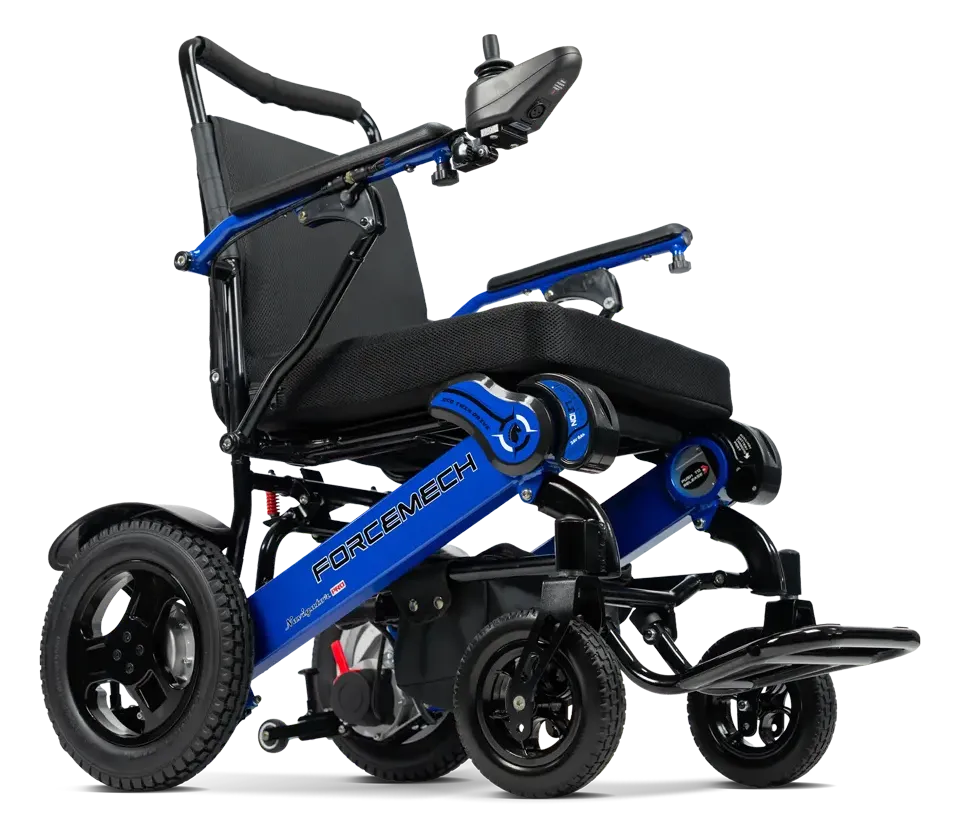
In our current standings, the cheapest chair with a published manufacturer price is the EWheels EW-M45 at $1,299. The most expensive is the Forcemech ARK at $7,198. Between them sits the shape of the whole market.
Light folding travel chairs cluster tightly — the priced models in that class sit at $2,999, sold direct, online, at one published price: the consumer-electronics end of the industry.
Full-size and heavy-duty chairs spread far wider: from the EWheels EW-M45 at $1,299 through the Merits Atlantis P710 at $4,910 and Pride's Jazzy 1450 at $5,399. At the top, design-led and luxury machines pass $7,000.
Why most chairs have no public price
28 of the 38 chairs we track publish no price at all. They are sold through dealers and durable-medical-equipment suppliers, where the number depends on configuration, seating options and — often — what an insurer negotiates. The absence of a price tag isn't secrecy so much as a different sales channel.
That split matters for buyers. A published price can be compared in an afternoon. A dealer-quoted chair should be quoted in writing, itemized — base, seating, batteries, delivery — because the same model can be quoted hundreds of dollars apart.
The costs after the cost
Budget past the purchase. Lithium batteries are consumables with multi-year lives; a replacement for a travel chair's pack is a real line item, not a rounding error. Tires, a charger left at a relative's house, a travel bag for the chair — small numbers that add up.
Warranty is the other hidden price. In our scoring, manufacturer accountability — warranty length, return terms, published support — carries about a quarter of the total score, because a cheap chair with a five-year frame warranty can cost less over its life than a cheaper chair with a one-year promise and no phone number.
A sane way to set a budget
Start from the job, not the number. Daily indoor mobility with clinical seating is a dealer conversation, usually $4,000 and up once configured. Independent travel and errands point at the folding class around $3,000. Then hold back a reserve for the battery you'll replace in year three or four — and buy the warranty, not the discount.